
Ever notice that everyday tasks feel a little harder than they used to? Maybe the stairs leave you more winded than before, that bag of groceries seems heavier, or your muscles take an extra day to bounce back after exercise. It’s tempting to write these changes off as “just getting older,” but there’s usually a specific culprit behind them: muscle loss.
Starting in our 30s, our bodies naturally begin losing muscle mass — and that process picks up speed after 40. This gradual decline, known as sarcopenia, can chip away at strength, balance, and mobility over time. Here’s the encouraging part: muscle loss isn’t something you simply have to accept. With a handful of consistent daily habits, you can hold onto your strength, age well, and keep doing the things you love for years to come.
In this guide, we’ll walk through why muscle loss speeds up after 40, how to spot the early warning signs, and the most effective (and realistic) ways to protect your muscles — no gym marathon required.
📉 Why Does Muscle Loss Accelerate After 40?
Your muscle tissue is in a constant cycle of breakdown and repair. In your 20s and 30s, that rebuilding process runs smoothly. As you get older, though, a few things start to get in the way.
For one, hormones like growth hormone and testosterone — both important for maintaining muscle — naturally decline with age. On top of that, many adults simply move less as life gets busier, joints get achier, or work becomes more sedentary. And when your body isn’t being asked to do much, it responds by holding onto less muscle.
Nutrition matters too. Many older adults eat less protein than their bodies actually need, which makes it harder to repair and rebuild muscle tissue.
Left unaddressed, this can mean losing 3% to 8% of your muscle mass every decade after 30, with the pace picking up even more after 60.
The good news? These lifestyle factors are exactly the ones you can influence.
⚠️ Early Warning Signs of Muscle Loss
Muscle loss rarely announces itself. It creeps in slowly, which is why it’s easy to miss until everyday tasks start feeling noticeably harder.
Keep an eye out for signs like:
- Trouble climbing stairs
- Feeling weaker carrying groceries
- A slower walking pace
- Difficulty standing up from a chair
- Reduced balance or coordination
- Getting tired after only light activity
- Clothes fitting looser around your arms or legs
If a few of these sound familiar, consider it a nudge — now’s a great time to start rebuilding strength before it progresses further.
✅ Simple Daily Habits That Help Preserve Muscle
Preventing muscle loss doesn’t require punishing workouts or a garage full of equipment. Small, consistent habits tend to deliver the biggest results over time.
🚶 Stay Active Every Day
You don’t need to carve out hours for exercise.
Aim for at least 30 minutes of movement on most days — walking, gardening, cycling, swimming, even chores around the house all count toward keeping your muscles engaged.
The real key is avoiding long stretches of sitting. Something as simple as standing up once an hour for a short walk can make a meaningful difference over time.
🏋️ Add Strength Training Two or Three Times a Week
Strength training is essentially a signal to your body: these muscles are still needed.
You don’t need a gym membership to see results. Plenty of effective exercises can be done safely at home using just your body weight or an inexpensive resistance band.
A good place to start:
- Chair squats
- Wall push-ups
- Standing calf raises
- Step-ups on a sturdy stair
- Resistance band rows
Focus on proper form first — the resistance can build up gradually from there.
🍗 Eat Enough Protein Throughout the Day
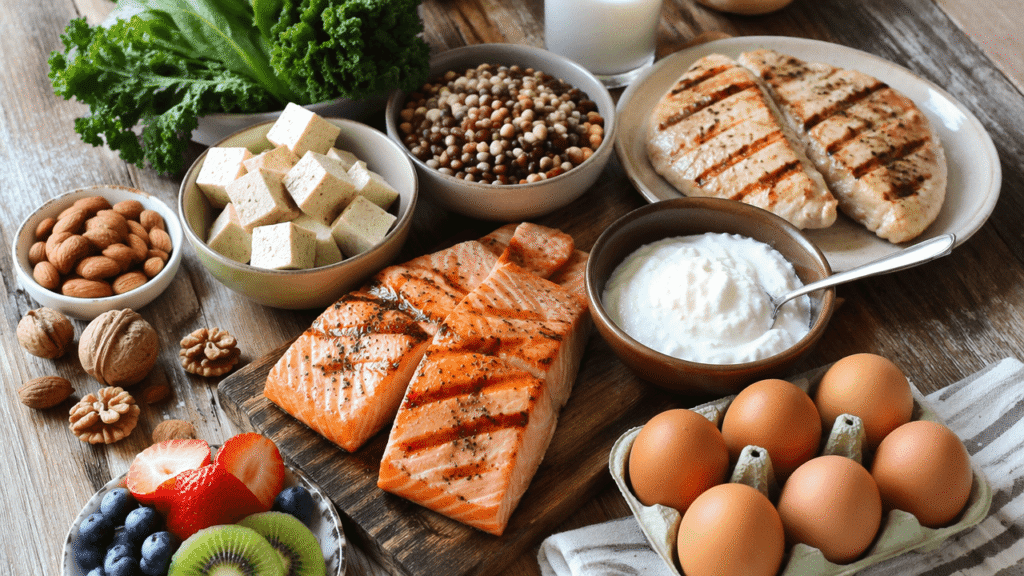
Protein gives your muscles the raw material they need to repair and grow.
A lot of people load most of their protein into dinner, but research suggests spreading it evenly across meals may do more to support muscle maintenance.
Some solid protein sources:
- Chicken
- Turkey
- Fish
- Eggs
- Greek yogurt
- Cottage cheese
- Beans
- Lentils
- Tofu
- Low-fat dairy
Most healthy adults over 40 benefit from getting adequate protein daily, though the right amount depends on activity level and individual health factors. If you have kidney disease or another medical condition, it’s worth checking with your healthcare provider before making major dietary changes.
😴 Prioritize Quality Sleep
Recovery doesn’t only happen at the gym.
While you sleep, your body repairs damaged tissue and produces the hormones that support muscle maintenance.
Most adults do best with seven to nine hours of quality sleep a night.
Skimp on sleep for too long, and you’ll likely notice slower recovery, more fatigue, and less motivation to stay active.
🥗 The Best Foods for Healthy Muscles
Diet does just as much heavy lifting as exercise when it comes to muscle health.
Aim for whole foods rich in protein, vitamins, minerals, and healthy fats.
Some standout options:
- Salmon — protein plus omega-3 fatty acids
- Eggs — a complete protein source
- Lean beef in moderation — iron and vitamin B12
- Leafy greens — magnesium
- Nuts and seeds — healthy fats
- Beans and legumes — plant-based protein
- Milk or fortified alternatives — calcium and vitamin D
Don’t overlook hydration, either — dehydration alone can sap your physical performance and leave you feeling more fatigued.
🏠 Safe Home Exercises That Support Healthy Aging
A lot of people avoid exercise out of concern for their joints, and that’s understandable.
Fortunately, low-impact movements can build real strength while going easy on your knees and hips.
A beginner-friendly routine might look like:
- 10 chair squats
- 10 wall push-ups
- 15 standing calf raises
- A 20-second balance hold on each leg
- A 20-minute brisk walk
Do this routine two or three times a week, and gradually increase the reps as your strength builds.
🚫 Common Mistakes That Speed Up Muscle Loss
Plenty of people unknowingly fall into habits that accelerate muscle loss. Recognizing them is the first step to turning things around.
Skipping strength training
Walking is fantastic for your heart, but on its own it isn’t enough to preserve muscle mass. Muscles need resistance to stay strong — even light resistance work, done consistently, adds up to a real difference over time.
Not eating enough protein
As people age, they sometimes eat less overall without realizing their protein intake has dropped along with it. That makes it harder for the body to repair muscle and recover from physical activity.
Sitting for long stretches
Long hours of sitting reduce muscle activity and gradually weaken the legs and core. If you’re at a desk all day or spend a lot of time in front of the TV, try standing and moving for a few minutes every hour.
Neglecting balance and flexibility
Strength is only part of the picture. Balance and flexibility help prevent falls, support good posture, and make everyday movement easier. A little stretching or balance work each week goes a long way.
✨ Small Lifestyle Changes That Make a Big Difference
You don’t need to overhaul your entire life to protect your muscles. Small, consistent improvements tend to add up to lasting results.
A few ideas to build in:
- Take a short walk after meals
- Use the stairs when you can
- Carry your groceries instead of always relying on a cart
- Stretch for five minutes each morning
- Drink enough water throughout the day
- Include protein at every meal
- Spend a little time outdoors for natural sunlight and vitamin D
None of these habits seem like much on their own, but together they add up to stronger muscles and better overall health.
🩺 When Should You Talk to Your Doctor?
Some muscle loss with age is normal — but significant weakness is never something to brush off.
Reach out to your healthcare provider if you notice:
- Frequent falls
- Trouble getting out of a chair
- Rapid, unexplained weight loss
- Ongoing fatigue
- Muscle weakness that’s interfering with daily life
Your doctor can help determine whether an underlying condition, nutritional gap, or medication might be playing a role.
📌 Final Takeaways
Losing muscle after 40 isn’t something you have to simply accept. Aging changes the body, sure — but your daily choices have real power over how well you maintain strength and mobility.
You don’t need fancy equipment or grueling workouts. Regular movement, simple strength exercises, enough protein, quality sleep, and a balanced diet are really all it takes as a foundation.
Above all, consistency is what counts. Even small habits, repeated day after day, can help you stay active, independent, and confident for years to come.
It’s never too early — or too late — to start taking care of your muscles.
❓ Frequently Asked Questions
Can muscle loss after 40 be reversed?
In many cases, yes. While aging itself can’t be stopped, regular strength training combined with proper nutrition and adequate protein intake can help rebuild muscle and improve strength over time.
How much protein do adults over 40 need?
Protein needs vary based on age, body weight, activity level, and overall health. Many experts recommend spreading protein intake evenly across meals rather than loading up at one sitting. If you have kidney disease or another medical condition, talk to your healthcare provider for guidance tailored to you.
Do I need a gym to build muscle?
Not at all. Exercises like chair squats, wall push-ups, step-ups, and resistance band workouts can all be done safely at home with little to no equipment.
Is walking enough to prevent muscle loss?
Walking is great for cardiovascular health and overall fitness, but pairing it with strength training two or three times a week does more to preserve muscle mass.
What’s the best exercise for beginners over 40?
There’s no single “best” exercise. A mix of walking, bodyweight movements, resistance band work, balance training, and gentle stretching gives most healthy adults a safe, effective starting point.
🎯 Next Step
Healthy aging isn’t about chasing perfection — it’s about building sustainable habits that support your body day after day. Pick one new habit to start this week, whether that’s a short strength workout, a bit more protein, or a daily walk. Small steps like these, repeated consistently, can go a long way toward protecting your muscles and keeping you active well into the future.